Bardolino Wine: History, Traditions, and Festivals on Lake Garda
Bardolino Wine: History, Traditions, and Festivals on Lake Garda
When you think of Bardolino, it’s easy to immediately picture the lake, the lakeside promenade, strolls along the shore, and summer days. But there’s another element that has been deeply rooted in this area for centuries: wine.
It’s not just a local product to enjoy during a vacation. Viticulture has helped shape the landscape, economy, and traditions of Bardolino and the surrounding hills. And even today, the town’s calendar still follows, in part, the rhythm of wine production.
The Grape and Wine Festival in the fall, the Palio del Chiaretto in the spring, and the events dedicated to Novello wine in the fall months all tell, at different times of the year, the same story: that of a region where the lake, the hills, agriculture, and hospitality are closely intertwined.
A history that began long before tourism
The relationship between Bardolino and the vine did not begin with modern tourism.
Artifacts have been found in the Bardolino area that attest to the presence of vines and the use of wine as far back as ancient times. The Chiaretto and Bardolino Protection Consortium documents Roman-era findings related to wine production and storage, while the earliest written records of local viticulture date back to the Early Middle Ages. As early as 807, for example, a “caneva”—a cellar used for storing wine—existed on land belonging to the Monastery of San Zeno of Verona in Bardolino.
In the centuries that followed, viticulture became firmly established on the hills of the Veronese Lake Garda region. As early as the 15th century, some authors were already describing the area’s wines as particularly highly regarded, and by the 19th century, the production began to be explicitly identified by the name “Bardolino.” The first technical analyses of local wines date back to 1873.
The modern history of the appellation, however, has a specific date: May 28, 1968, when the Bardolino DOC was established. The following year, the Consortium for the Protection of the Appellation was founded.
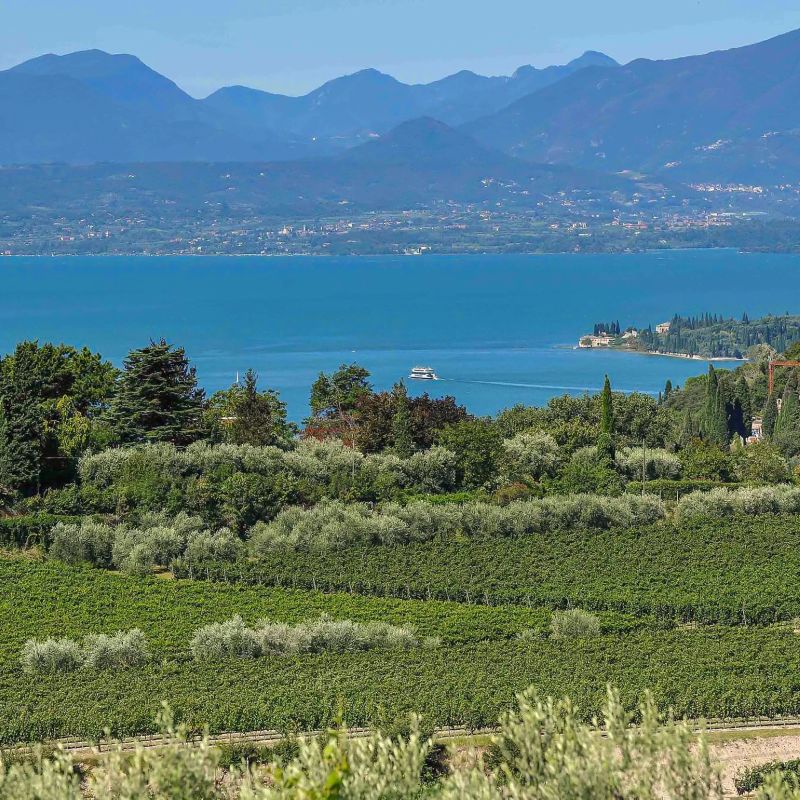
Today, the appellation’s production area encompasses 16 municipalities and extends across the eastern morainic amphitheater of Lake Garda. It is a much more diverse territory than it might appear when viewed simply from the lake’s shore: it includes the Garda hills, the hinterland toward Monte Baldo, and the southern morainic hills.
And it is precisely this diversity that contributes to the identity of Bardolino wines.
The Territory in the Glass
The landscape surrounding Bardolino is the result of the action of the glaciers that shaped the Lake Garda basin. The morainic hills, the lake, Monte Baldo, and the nearby Adige Valley all contribute to creating different climatic conditions within the same production area.
The lake plays an important role in regulating temperatures, while air currents and the presence of the mountains help create a mosaic of microclimates. The result is an environment particularly favorable to viticulture.
Among the appellation’s most important grapes are Corvina Veronese and Rondinella, varieties that represent the heart of the local winemaking tradition. These are the grapes that form the basis of Bardolino and, through different winemaking techniques, also of Chiaretto.
Bardolino DOC is a red wine that is generally light, fresh, and characterized by soft tannins. Its profile is very different from that of some of Italy’s great, full-bodied reds: its strength also lies in its drinkability and its ability to naturally complement everyday cuisine. The Consortium describes it as a wine deeply connected to the territory of the lake, the hills, and the mountains.
Alongside Bardolino DOC, we find Bardolino Classico, produced in the area with the longest-standing tradition, and Bardolino Superiore, which holds DOCG status.
But the world of Bardolino wine doesn’t stop at reds.
Chiaretto, the Rosé Wine of Lake Garda
One of the region’s most representative wines is Bardolino Chiaretto DOC.
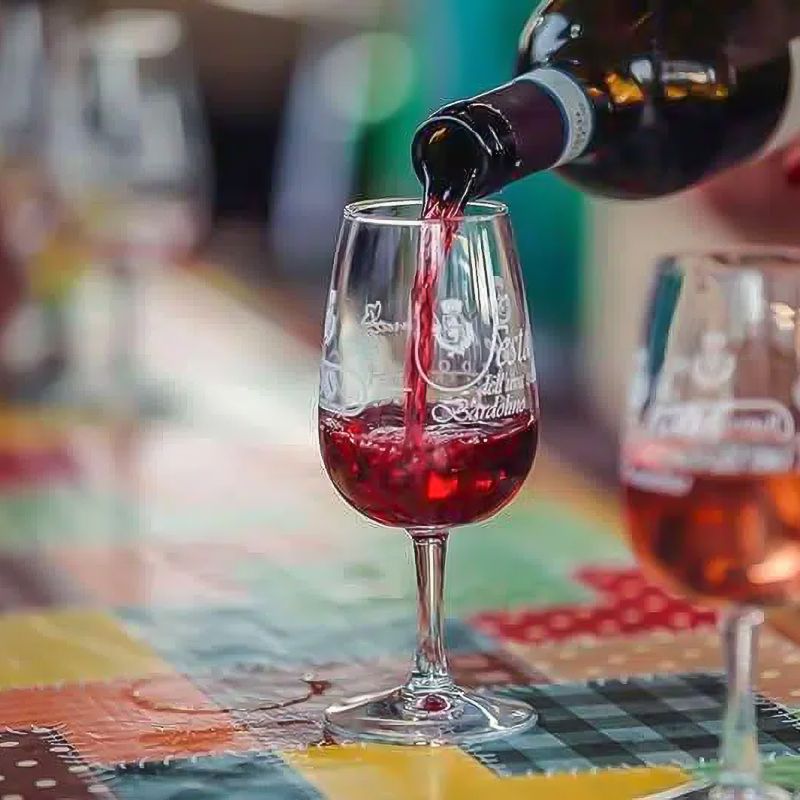
Chiaretto is made from the same grapes as Bardolino, but through a “rosé” winemaking process, with limited contact between the must and the skins. It is precisely this process that gives it its characteristic pale pink color.
In the glass, it is a bright and fresh wine, with aromas reminiscent of flowers, citrus, and fresh fruit. On the palate, it generally offers a good savory component and a freshness that makes it particularly well-suited as an aperitif, but also as a dining wine.
The history of Chiaretto on Lake Garda is particularly interesting. A local tradition credits Pompeo Molmenti—a Venetian senator, lawyer, and writer—with developing a specific “rosé-style” winemaking technique on Lake Garda in 1896. The Consortium points out, however, that the production of light-colored wines was already deeply rooted in the area’s winemaking tradition.
Today, Chiaretto has become one of the wine symbols of the Venetian shore of Lake Garda.
And one of the most distinctive events on Bardolino’s calendar is dedicated to this very wine.
The Palio del Chiaretto: When the Lake Turns Pink
Every spring, Bardolino dedicates an entire festival to its rosé wine: the Palio del Chiaretto.
In 2026, the event reached its 21st edition and took place from June 5 to 7, involving not only Bardolino but also Lazise. The two lakefronts became a major showcase for the participating wineries, featuring tastings, direct sales, and musical and cultural events.
It is interesting to note how this event is almost the mirror image of the Festa dell’Uva.
The Festa dell’Uva takes place at the end of the summer season and celebrates the grape harvest and Bardolino wine. The Palio del Chiaretto, on the other hand, takes place in the spring, when the lake gradually comes alive again for the new tourist season.
Two different times of year, two wines with different characteristics, but the same connection to the local territory.
The Grape and Wine Festival: A Tradition That Has Lasted for Nearly a Century
However, it is in the fall that Bardolino most vividly celebrates its wine-growing identity.
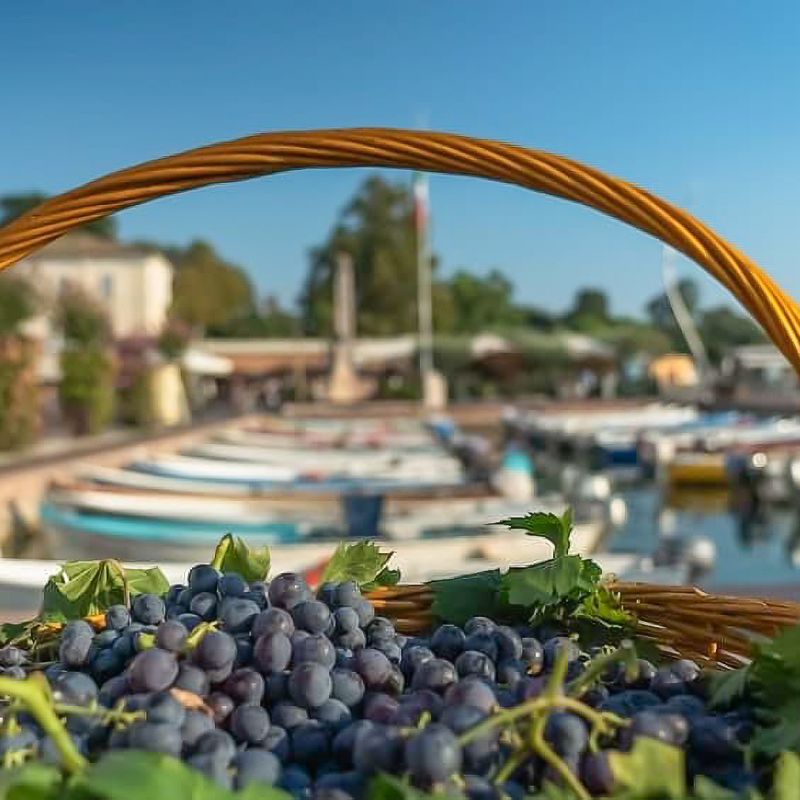
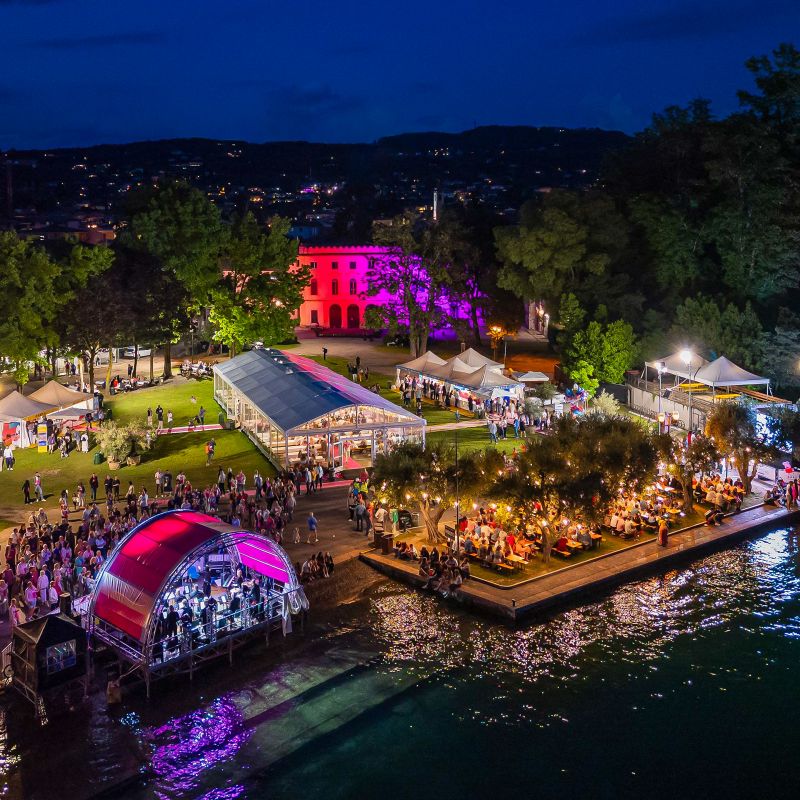
From October 1 to 5, 2026, the 95th Bardolino Grape and Wine Festival returns to the lakeside promenade—an event founded way back in 1929 specifically to celebrate the grape harvest and wine.
Nearly a century later, the festival has become one of the most well-known events on Lake Garda, yet it still retains certain elements that hark back to its agricultural origins.
The 2026 program includes tastings, food and wine stands, music, performances, and events dedicated to the history and culture of the region. Local associations and wineries will offer tastings of various types of Bardolino wine, ranging from Classico to Superiore to Chiaretto.
One of the most symbolic moments will be the traditional grape crushing, scheduled for Sunday, October 4, at Carrara Bottagisio Park as part of the “Come se fasèa el vin” event.
It is a simple, almost elementary gesture, but precisely for this reason, it is particularly meaningful: it recalls a time when wine was, first and foremost, the tangible result of agricultural labor and community life.
The festival also preserves other elements linked to Bardolino’s heritage, such as the parade, historical reenactment groups, vintage tractors, and the celebrations of the Bardolino Wine Brotherhood. The 2026 program also includes an awards ceremony for the best wines and vineyards.
The event, therefore, is not merely a large-scale folk festival. It is also an occasion for Bardolino to tell its own story.
From Bardolino to Novello: Wine Changes with the Season
When the Grape Festival ends, Bardolino’s relationship with wine does not stop.
A few weeks later, a completely different wine arrives: Bardolino Novello.
Novello is a wine meant to be enjoyed young. Its production uses at least 85% of grapes subjected to carbonic maceration, a technique that helps develop distinctive aromatic characteristics and a pronounced fruity profile. In 1987, Bardolino became the first Italian Novello wine to obtain DOC status.
The way it is enjoyed is also interesting.
It’s not a wine to be cellared for years. It’s an autumn wine, meant to be enjoyed relatively young and paired with simple, seasonal dishes: cured meats, meats, cheeses, and especially chestnuts.
In Bardolino, Novello is celebrated with a dedicated event, traditionally held in November.
The municipality describes “Bardolino d’Autunno con il vino Novello” as an event where tradition and food and wine come together amid the colors of autumn. In addition to tastings, the event features local specialties, roasted chestnuts, fried pumpkin, bruschetta with new olive oil, cheeses, and other seasonal delicacies.
Three Festivals, Three Times of the Year
Looking at the calendar as a whole, a curious aspect emerges.
In Bardolino, wine isn’t limited to just one time of year.
In the spring, there’s the Chiaretto.
The lake begins to fill up with visitors again, the days grow longer, and the rosé wine takes center stage at the Palio del Chiaretto.
In the fall comes the Festa dell’Uva.
It’s harvest time—the season of Bardolino wine, tastings, and traditions that hark back to the town’s agricultural history.
Then comes the Novello.
The atmosphere shifts once more: the days are shorter, the lake grows quieter, the colors of fall arrive, and the young wine pairs perfectly with chestnuts and seasonal produce.
It’s not just a calendar of events.
It’s almost a way to follow the seasons of Bardolino through wine.
An agricultural tradition that has become part of the town’s identity.
Over the course of the 20th century, Bardolino changed profoundly.
From a town tied to fishing, agriculture, and viticulture, it became one of the best-known tourist destinations on Lake Garda. The growth of tourism transformed the town, its historic center, and its relationship with the lake.
Winegrowing, however, has not disappeared.
On the contrary, it continues to be one of the ways in which Bardolino expresses its identity.
The Grape Festival itself, founded in 1929 in a distinctly agricultural context, has evolved over the decades into a major tourist event. It used to take place in the town’s central square, where wine was distributed and the tools used for winemaking were displayed; today, the heart of the festival is the lakeside promenade, and the event attracts visitors even from outside the region.
This transformation is common to many tourist destinations: some traditions change form, but they continue to represent the place from which they originate.
And perhaps this is precisely the value of wine festivals.
For a few days, Bardolino is not just a resort on Lake Garda where one can spend a vacation. It once again reveals a part of its history.
A Way to Discover the Region
You can also explore the world of wine away from major events.
In 1984, the Bardolino Wine Route was established—an approximately 80-kilometer itinerary that winds through the municipalities of the production area. The route passes through vineyards, farms, and wineries, as well as landscapes and sites of historical and architectural interest.
It is perhaps one of the most interesting ways to understand just how closely wine is tied to the landscape.
When viewing Bardolino from the lake, the hills behind it may seem like just part of the scenery. Traveling through them, however, you discover that it is precisely those hills that tell an important part of the town’s history.
Vineyards, olive groves, small villages, and rural roads create a landscape very different from that of the lakeside, yet just as distinctive.
And this is also why wine can be considered an integral part of the territory in the broadest sense of the term.
Bardolino, Even When Summer Ends
Finally, there is one aspect that, for those familiar with Bardolino, is hard to miss.
Wine helps keep the town alive even as the summer season begins to wind down.
The Grape Festival takes place precisely at that time of year when summer gives way to fall. The lake still takes center stage, but the landscape changes, the days grow shorter, and the hills begin to take on different colors.
Then comes the Novello, and a few months later, spring brings back the Chiaretto.
This is one of the characteristics that make this region so fascinating: the seasons do not erase what came before, but simply change the way we experience it.
Bardolino wine was born from the land, but over time it has also become culture, tradition, hospitality, and an occasion for gathering.
For those visiting Lake Garda for the first time, getting to know Bardolino therefore also means getting to know this part of its history.
And perhaps, during a stroll along the lakefront, over a glass of Bardolino or Chiaretto, it’s easier to understand why wine here isn’t simply something to drink.
It’s one of the ways this region tells its own story.
Sources consulted: Municipality of Bardolino · Bardolino TOP · Visit Bardolino · Consortium for the Protection of Chiaretto and Bardolino